


Views: 0 Author: Site Editor Publish Time: 2026-09-30 Origin: Site


Does your arm throb after a grueling 10-hour shift? A hammer is not just a heavy chunk of metal on a stick. It acts as a direct biomechanical extension of your arm. Swinging the wrong tool ruins delicate building materials. Worse, it wreaks havoc on your joints over time. The market is flooded with gear. Choosing between a modern fiberglass composite and a traditional solid steel handle is a critical decision for tradespeople.
To make a smart upgrade, you need to look beyond the raw weight of the head. You must evaluate the handle material engineering. In this guide, we break down structural pros, ergonomic flaws, and specific jobsite applications of both variations. We will help you make the smartest purchasing decision for your daily workflow.
Steel Handle Hammers deliver unparalleled durability and raw striking power. They are the objective choice for heavy-duty demolition and high-impact framing tasks.
A fiberglass model functions as a highly efficient shock-dampening tool. It drastically reduces the harsh vibrations that lead to chronic elbow and wrist fatigue.
For general woodworking and precision finishing, a fiberglass carpentry tool provides superior balance and a lighter swing weight. This protects both the user and delicate materials.
Your ultimate tool selection should be dictated by daily task requirements, long-term physical health considerations, and your budget.
To a layperson, driving a nail seems rudimentary. For construction professionals, the anatomy of a standard claw hammer represents a complex system of physics. How do the head, face, claw, neck, and grip interact during a strike? Buyers investing in professional-grade gear must understand this kinetic chain.
The repetitive motion of swinging a hand tool hundreds of times a day carries a severe cumulative impact. Every strike against a solid surface generates a wave of kinetic energy. A portion of this energy successfully drives the fastener. The residual shockwave travels directly down the shaft. It slams into your hand, wrist, and elbow. Over years, absorbing this constant vibration leads to debilitating chronic conditions. Understanding material science is a fundamental requirement for occupational health and career longevity.
Steel handle hammers dominate rough job sites for good reason. Manufacturers typically build them in two distinct ways: tubular steel and one-piece drop-forged solid steel. Premium one-piece models are crafted from a single continuous billet of high-carbon steel. This extends from the striking face down to the base of the grip. Such construction offers structural integrity that composite materials simply cannot match.
Maximum Durability: Solid steel is virtually indestructible under standard construction conditions. It withstands severe overstrikes. Accidentally smashing the neck against a concrete form instead of the nail head will not bend, splinter, or destroy the tool.
Striking Force: Metal is inherently dense. The heavier overall mass of a solid steel tool delivers massive kinetic energy upon impact. This density makes it highly efficient for sinking large fasteners with fewer swings.
Prying Power: Pulling stubborn rusted nails requires aggressive lateral leverage. Twisting apart warped 2x4 studs demands extreme force. A solid steel neck provides the strongest leverage available without the terrifying risk of the handle snapping in half.
Vibration Transfer: The primary drawback of steel lies in its density. Metal is a phenomenal conductor of kinetic energy. It transmits the maximum amount of shock directly up the user's arm. This jarring feedback is a major pain point frequently discussed in professional contractor circles.
Weight and Fatigue: The sheer mass of a solid steel tool induces rapid muscle fatigue. Constantly wielding a heavy steel shaft drains stamina quickly. This is especially true when performing overhead work like installing ceiling joists for an 8-hour shift.
Given its unbreakable nature and heavy striking force, a steel handle is ideal for rough construction. It excels in concrete formwork, aggressive demolition tasks, and structural framing. In these scenarios, raw strength and extreme leverage are prioritized over user ergonomics.
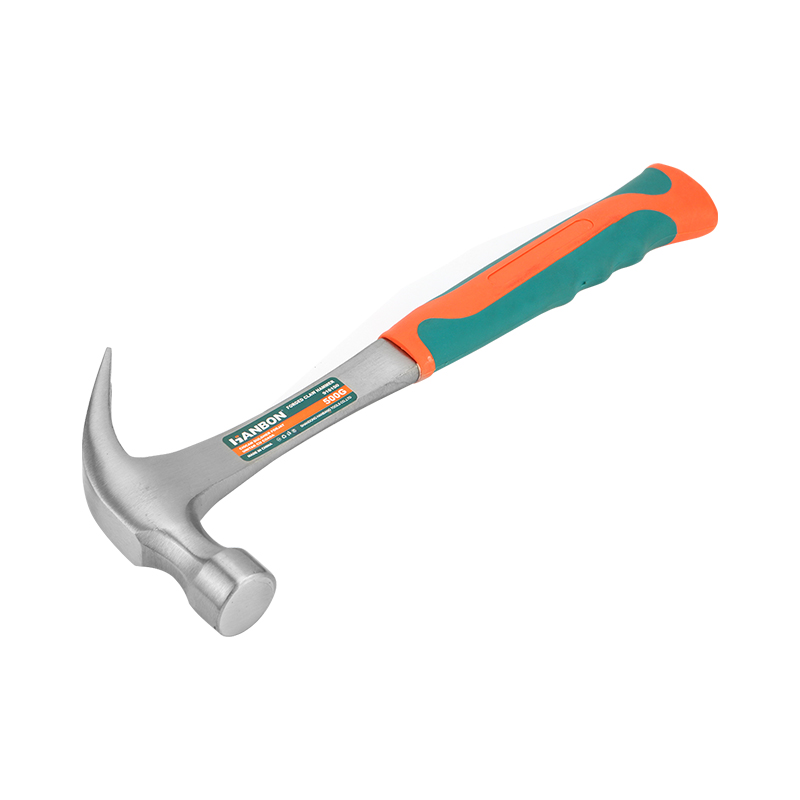
Shifting focus to composite materials, fiberglass handles are sophisticated engineering marvels. Tool designers utilize a core of pultruded fiberglass resin. They encase this core in a protective polymer or a thick, textured thermoplastic rubber over-mold. High-strength industrial epoxy then securely bonds this composite shaft to a forged steel head.
Vibration Dampening: The composite cellular structure naturally disrupts the transfer of kinetic energy. Acting as an exceptional fiberglass claw hammer, it dissipates harsh vibrations before they ever reach your hand. This offers unparalleled protection for vulnerable joint tissues.
Lightweight Efficiency: Fiberglass is substantially lighter than solid steel. This allows for a much faster swing velocity. According to the laws of physics, speed contributes more to kinetic energy than mass. A lighter fiberglass tool drives nails highly effectively while actively preventing shoulder and rotator cuff fatigue.
Weather Resistant: Unlike traditional hickory wood, fiberglass is completely impervious to environmental fluctuations. It refuses to shrink in dry heat, expand in high humidity, or rot when left exposed to wet, muddy jobsite conditions.
Vulnerability to Overstrikes: The Achilles heel of fiberglass is its susceptibility to direct lateral impact damage. If a tired user repeatedly misses the nail and strikes the target with the fiberglass neck, the composite core will eventually splinter. This fraying ultimately compromises the tool's structural integrity.
This material shines brightly in finishing applications. It is perfect for trim work, siding installation, cabinetry, and general jobsite tasks. Pinpoint precision, prolonged stamina, and joint protection are critical daily requirements for these jobs.
When evaluating gear for professional use, anecdotal jobsite preferences often overshadow empirical data. Tradespeople must analyze how different handle materials perform under objective real-world conditions to make an informed purchasing decision.
Feature / Metric | Solid Steel Handle | Fiberglass Handle |
|---|---|---|
Durability Against Overstrikes | Exceptional; nearly impossible to break. | Moderate; prone to cracking upon repeated direct impact. |
Shock Absorption | Poor; high vibration transfer to the arm. | Excellent; natural dampening properties. |
Swing Weight Balance | Evenly distributed, requiring more exertion. | Head-heavy, which increases swing momentum. |
Prying Leverage | Maximum; safe for heavy demolition. | Moderate; excessive force may snap the neck. |
The physics of striking a nail involves a massive transfer of kinetic energy. When a steel head strikes a solid surface, a high-frequency vibration wave travels directly down the shaft. A fiberglass composite acts as a natural insulator against this kinetic transfer. It dissipates the energy before it reaches the user's hand. Conversely, without highly specialized thick rubber over-molds or internal tuning fork designs, a steel shaft transfers the majority of that harsh shock directly into your metacarpal bones and forearm.
From a strict metallurgical standpoint, a one-piece drop-forged steel tool wins the longevity test. The head and handle are forged from a single continuous piece of metal. There is no joint to fail. It endures decades of heavy jobsite abuse. A fiberglass handle relies on an epoxy bond where the handle meets the steel head. While incredibly strong under tension, it remains vulnerable to catastrophic failure if the user is prone to severe overstriking.
The specific gravity of fiberglass is significantly lower than that of solid steel. This creates a naturally head-heavy tool. Biomechanically, a head-heavy balance allows gravity and swing momentum to do the majority of the work. You increase strike velocity with less muscular exertion. Steel hammers carry more weight throughout the shaft. This makes them feel sluggish and causes rapid shoulder fatigue during prolonged tasks.
Understanding the distinction between specialized profiles is just as critical as selecting the handle material. Using the wrong tool for your specific trade reduces daily efficiency. It can also permanently damage expensive building materials.
A framing hammer is a purpose-built implement designed for rough carpentry, structural framing, and concrete formwork. Typically weighing between 20 and 28 ounces, these tools feature a longer handle for maximum leverage. They utilize a milled waffle face to prevent slipping when driving large nails. Framers often lean toward solid steel models because the job requires brute force. The tool is frequently used as a makeshift pry bar to separate heavy studs. The unbreakable nature of a solid steel shaft makes it the optimal choice for these high-stress applications.
Engineered for finish work, trim installation, cabinetry, and siding, a general carpentry hammer weighs between 16 and 20 ounces. It features a shorter handle for enhanced precision. A smooth face ensures that accidental surface strikes do not leave destructive waffle imprints. Finish carpenters overwhelmingly prefer the lightweight control and balance of a fiberglass handle. Delicate tasks require hundreds of precise strikes per day. The reduced swing weight helps maintain accuracy and prevents costly mistakes on expensive hardwoods.
Recent market analyses reveal a significant shift in how construction professionals purchase their gear. Historically, raw weight and brute durability were the sole metrics of a quality tool. Today, the landscape is changing. With an aging workforce and a growing awareness of occupational health among younger tradespeople, the industry is witnessing a massive pivot toward ergonomics.
Search trends indicate a sharp increase in demand for vibration-reducing equipment. Contractors are increasingly abandoning overly heavy steel implements. They favor advanced composite materials to extend career longevity and reduce workers' compensation claims related to repetitive strain injuries. Manufacturers are responding by heavily investing in hybrid designs. These feature vibration-dampening cores, non-slip thermoplastic rubber grips, and optimized weight distribution. Modern professionals no longer have to sacrifice physical health to achieve jobsite efficiency.
The physical toll of daily construction work is a highly discussed topic among professionals. Joint health is a primary concern. Ignoring the ergonomic properties of your gear leads to chronic, career-threatening injuries.
Swinging a heavy tool 300 times a day forces your forearm muscles and tendons to absorb repeated micro-traumas. This repetitive strain frequently leads to lateral epicondylitis. People commonly call this tennis elbow or carpenter's elbow. This painful condition involves the inflammation and micro-tearing of the tendons that join the forearm muscles on the outside of the elbow. Once developed, it causes severe chronic pain that can force a tradesperson to take extended leave from the jobsite.
To mitigate these micro-traumas, upgrading to a dedicated shock absorbing hammer is a medically sound preventative measure. By utilizing composite materials, the tool absorbs high-frequency vibration waves at the point of impact. Grip dynamics also play a crucial role. A high-quality fiberglass handle features a non-slip and shock-absorbing grip. This tacky surface prevents sweaty palms from slipping. It reduces the required grip strength, allowing the extensor muscles in the forearm to remain relatively relaxed during the swing. This drastically reduces the strain on the elbow joint.
When purchasing professional-grade equipment, buyers must look beyond flashy marketing. Focus intently on manufacturing quality. A poorly manufactured tool is inefficient and poses a severe safety hazard on an active jobsite.
Inspect the epoxy seal where the steel head meets the composite handle. The epoxy should be entirely smooth. It must completely fill the eye of the head without any visible air bubbles, cracks, or separation. Test the grip texture with work gloves on. The rubber should feel tacky and secure, not slick or hard plastic. Assess the weight balance by holding the tool loosely in your hand. Simulate a swing to ensure it does not feel overly cumbersome.
Consistency in metallurgical processing and composite bonding separates a lifetime tool from a disposable one. Sourcing your construction hand tools from reliable manufacturers is critical. High-quality suppliers adhere to strict ISO standards for drop-forging and heat-treating steel. This ensures the striking face achieves the perfect Rockwell hardness rating. It must be hard enough to drive nails without mushrooming, yet tempered enough to prevent hazardous chipping.
Neither hammer material is objectively bad. They simply serve vastly different purposes on the jobsite. Solid steel delivers unmatched power and indestructible leverage for demanding demolition and heavy framing projects. Fiberglass offers exceptional versatility, pinpoint precision, and essential joint protection for daily finishing tasks.
Evaluate your specific daily workflow and consider your long-term physical health. Investing in the right handle material is an investment in both your daily efficiency and your career longevity. Ready to upgrade your toolbelt? Explore the professional-grade selection at Hanbon Tools to find the exact model engineered for your specific jobsite needs.
Yes. While fiberglass composite is exceptionally strong under tension, it remains vulnerable to direct lateral impacts. The most common cause of breakage is repeated overstriking. This occurs when the user misses the nail head and smashes the handle shaft against the wood instead. Over time, these harsh impacts crush the protective rubber over-mold and fracture the internal fiberglass core. Under normal striking conditions where only the steel face makes contact, a high-quality fiberglass handle will last for many years.
No. The assumption that a heavier head automatically equals better performance ignores the fundamental physics of kinetic energy. Velocity plays a much larger role than mass in generating striking force. A lighter hammer that can be swung much faster will often deliver the same driving force than a heavy hammer swung slowly. Excessively heavy steel models cause rapid muscle fatigue and joint strain. This ultimately reduces a worker's overall productivity over an eight-hour shift.
A tool's ability to absorb shock is dictated by the acoustic impedance of its handle material. Wood and fiberglass possess complex non-uniform cellular or composite structures. These naturally disrupt and dissipate vibration waves generated upon impact. Solid steel acts as a perfect conduit, transferring the vibration directly to the user. To qualify as a true shock-absorbing tool, a steel model must feature highly engineered additions like hollow tuning-fork cores or thick rubber dampening collars. Fiberglass provides this ergonomic benefit inherently.
Professionals highly discourage this practice. Framing models are designed specifically for rough structural work. They typically feature a milled waffle-patterned striking face designed to grip large nail heads and prevent glancing blows. If used for general carpentry or finish work, this milled face leaves deep destructive dents in softwoods and expensive trim materials. The extra weight and longer handle of a framing tool make it far too unwieldy for delicate precise strikes.
The ideal weight depends entirely on your specific trade. For general carpentry, trim work, and cabinetry, a 16 to 20-ounce hammer provides the perfect balance of control and driving force. For rough structural framing and concrete formwork, professionals typically rely on 22 to 28-ounce models to maximize kinetic energy and leverage during heavy-duty tasks.
Maintaining a composite tool requires basic preventative care. Store the tool away from prolonged direct UV sunlight, which can slowly degrade the rubber over-mold. Wipe down the handle if it comes into contact with harsh chemical solvents or concrete adhesives. Routinely inspect the epoxy bond at the eye of the hammer head to ensure no micro-cracks have formed after heavy demolition work.


